Viral content is often described as unpredictable. In practice, most viral posts follow repeatable patterns. These patterns are rooted in human attention behavior and platform distribution logic.
In 2026, standing out on social media requires more than creative ideas. Execution speed, visual impact, and repeatability determine reach. Audiences scroll faster. Platforms reward early engagement signals.
AI tools now play a structural role in this process. They do not create virality on their own. They make proven viral mechanisms easier to execute at scale.
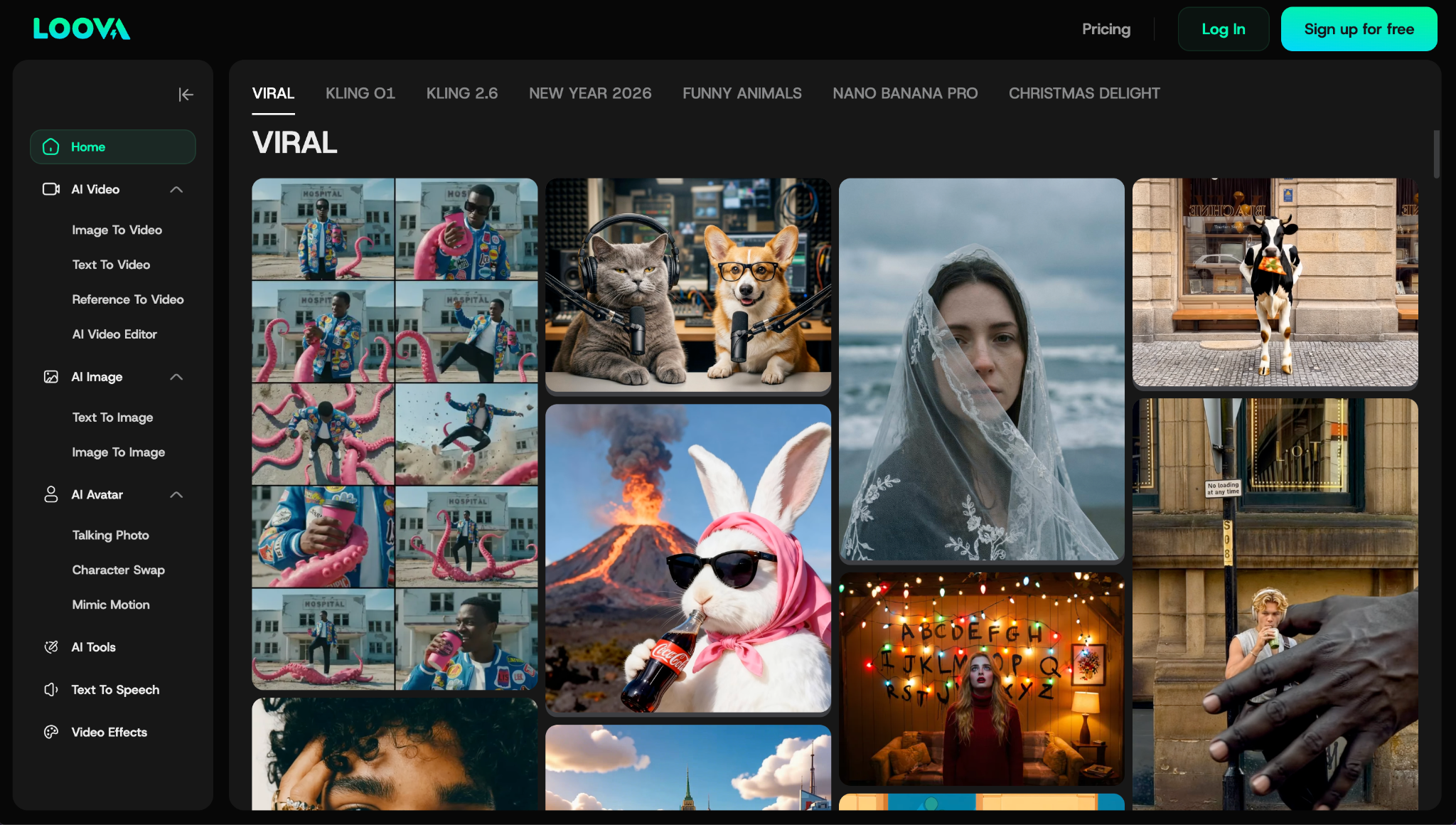
Platforms like Loova focus on this exact problem. By combining motion, character control, and rapid generation, Loova turns viral mechanics into repeatable workflows.
Mechanism 1: Motion Beats Stillness
Human attention reacts to movement. Motion signals change. Change interrupts scrolling behavior.
Static images struggle in fast feeds. Even high-quality photos compete poorly against subtle animation or motion cues.
This explains the rise of short looping videos and animated visuals. Small movements outperform complex designs.
Image-to-video workflows operationalize this mechanism. A still image becomes a moving asset. Light shifts. Camera motion appears. Depth increases.
Platforms prioritize these signals. Motion increases dwell time. Dwell time improves distribution.
AI tools reduce the cost of motion. Creators no longer need to animate manually. They apply motion as a layer.
This is why animated product shots, moving portraits, and subtle background motion now dominate social feeds.
Mechanism 2: Identity Surprise
Viral content often breaks expectation. Familiar elements appear in unfamiliar forms.
Character swaps, talking photos, and face-driven content exploit this effect. The brain detects identity mismatch. Attention spikes.
This is not novelty for novelty’s sake. It is prediction error. The viewer expects one outcome. The content delivers another.
AI-driven character manipulation lowers the barrier to this format. Creators apply identity shifts without filming or acting.
The result is highly shareable content. Viewers forward it not because it is polished, but because it surprises.
Identity-based surprise works across cultures. Faces remain the strongest visual anchor in feeds.
Mechanism 3: Cognitive Compression
Most social users do not read. They scan.
Long text fails because it demands effort. Viral content reduces effort. It compresses meaning.
Text-to-video workflows support this mechanism. Written ideas become visual summaries. Concepts appear as scenes, not paragraphs.
Compression improves comprehension speed. Faster understanding increases completion rates.
This explains why quote videos, list-based clips, and explainer shorts perform well. They deliver value with minimal cognitive load.
AI does not invent insight. It changes the delivery format to match attention constraints.
Mechanism 4: First-Frame Friction Reduction
The decision to watch happens instantly. Often before sound. Often before motion completes.
The first frame functions as a gate. If friction exists, scrolling continues.
High-performing content optimizes this moment. Clear focal point. High contrast. Recognizable face or object.
Thumbnail logic now applies to every video frame. AI image tools assist by testing layouts, colors, and framing quickly.
Creators who test multiple first-frame variants outperform those who rely on intuition.
Reducing friction increases initial engagement. Initial engagement triggers algorithmic amplification.
Mechanism 5: Loopability
Platforms reward replays. Replays inflate watch time without increasing reach cost.
Loopable content ends where it begins. Motion resets naturally. Viewers do not perceive a clear ending.
Subtle motion loops outperform narrative arcs in short-form feeds. They invite passive rewatching.
This is where Motion Mimic becomes critical.
Motion mimic workflows replicate realistic, repeatable movement patterns from reference clips. Instead of animating manually, creators reuse proven motion structures.
Loova’s motion mimic capability allows creators to apply the same gesture, movement, or pacing across multiple videos while preserving realism.
Loopability is not storytelling. It is mechanical retention.
Mechanism 6: Playfulness and Low Stakes
Viral content rarely asks for commitment. It asks for reaction.
Humor, light interaction, and playful effects reduce risk. Viewers engage because the cost is low.
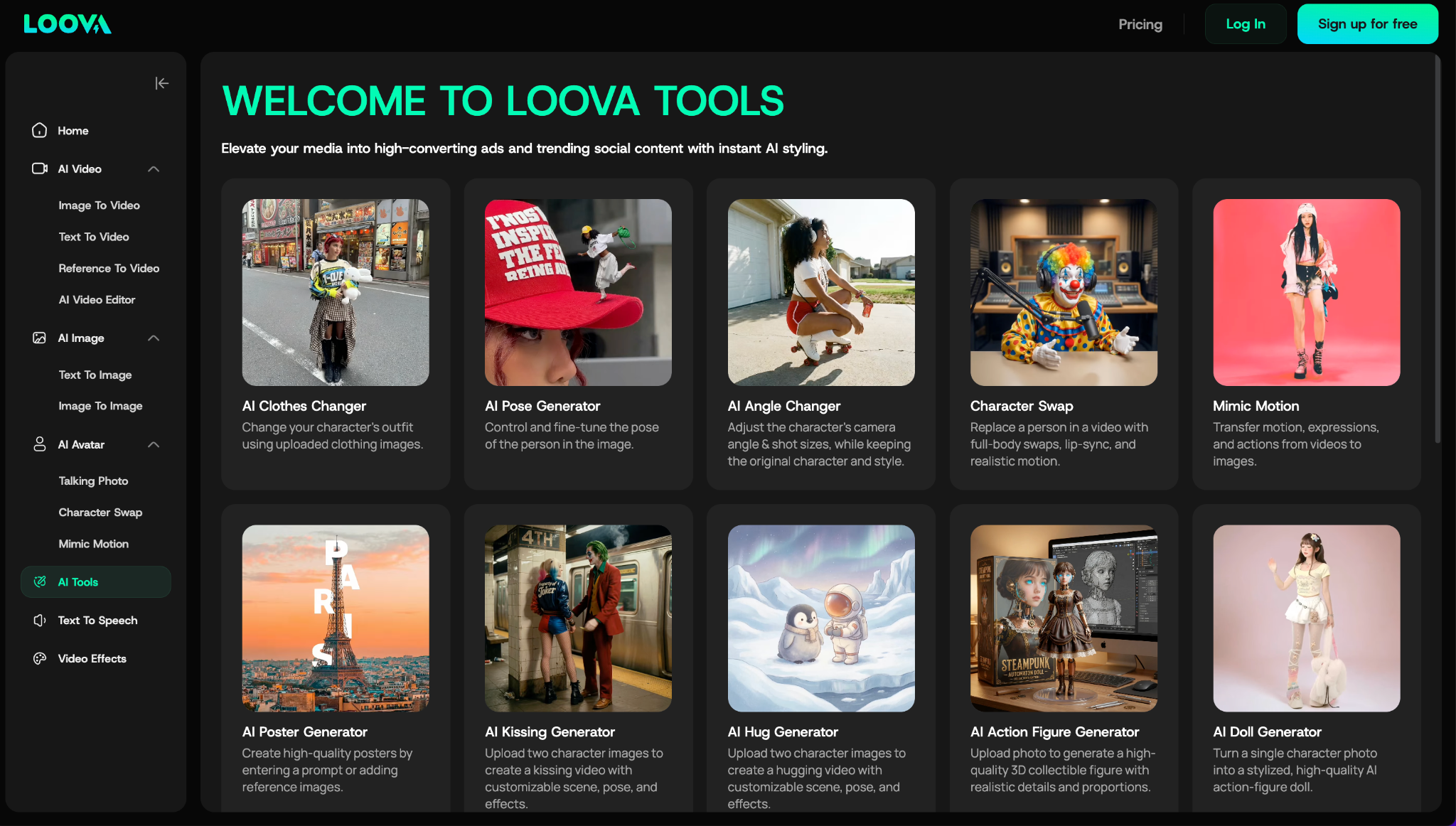
AI-powered visual effects, virtual interactions, and gesture-driven clips support this behavior. They feel casual, not produced.
This casual aesthetic aligns with platform culture. Polished ads underperform against informal content.
Low stakes increase sharing. Sharing increases reach.
Why These Mechanisms Are Hard to Execute Manually
None of these mechanisms are new. What changed is volume.
Executing motion, identity shifts, compression, and testing manually is expensive. It requires time and skills.
Most creators fail not due to lack of ideas, but due to execution friction.
AI tools remove this friction. They turn mechanisms into workflows.
Platforms like Loova consolidate these capabilities. Motion, character manipulation, text-to-video, and visual optimization live in one system.
This integration matters. Viral content relies on iteration. Faster iteration increases exposure to distribution windows.
From One-Off Virality to Repeatable Performance
A single viral post does not build growth. Repeatability does.
Creators who understand mechanisms outperform creators who chase trends.
AI enables this shift. Mechanisms become templates. Templates become systems.
Instead of asking “what should I post,” creators ask “which mechanism should I deploy today.”
This reframing changes output quality and consistency.
Conclusion
Viral social media content in 2026 is not accidental. It follows identifiable patterns rooted in attention and platform logic.
AI tools do not replace creativity. They operationalize it.
By understanding viral mechanisms and using AI to execute them consistently, creators move from isolated wins to sustained performance.
Virality is no longer magic. It is infrastructure.