
Sharing links quickly and reliably has become a basic requirement for businesses, creators, and service providers. As mobile usage continues to dominate, QR codes remain one of the simplest ways to connect offline users to online content. Among the different types available, static QR codes continue to be the most widely used for long-term and print-based use cases.
This article explains what static URL QR codes are, where they work best, and why choosing the right generator matters.
What Is a Static URL QR Code?
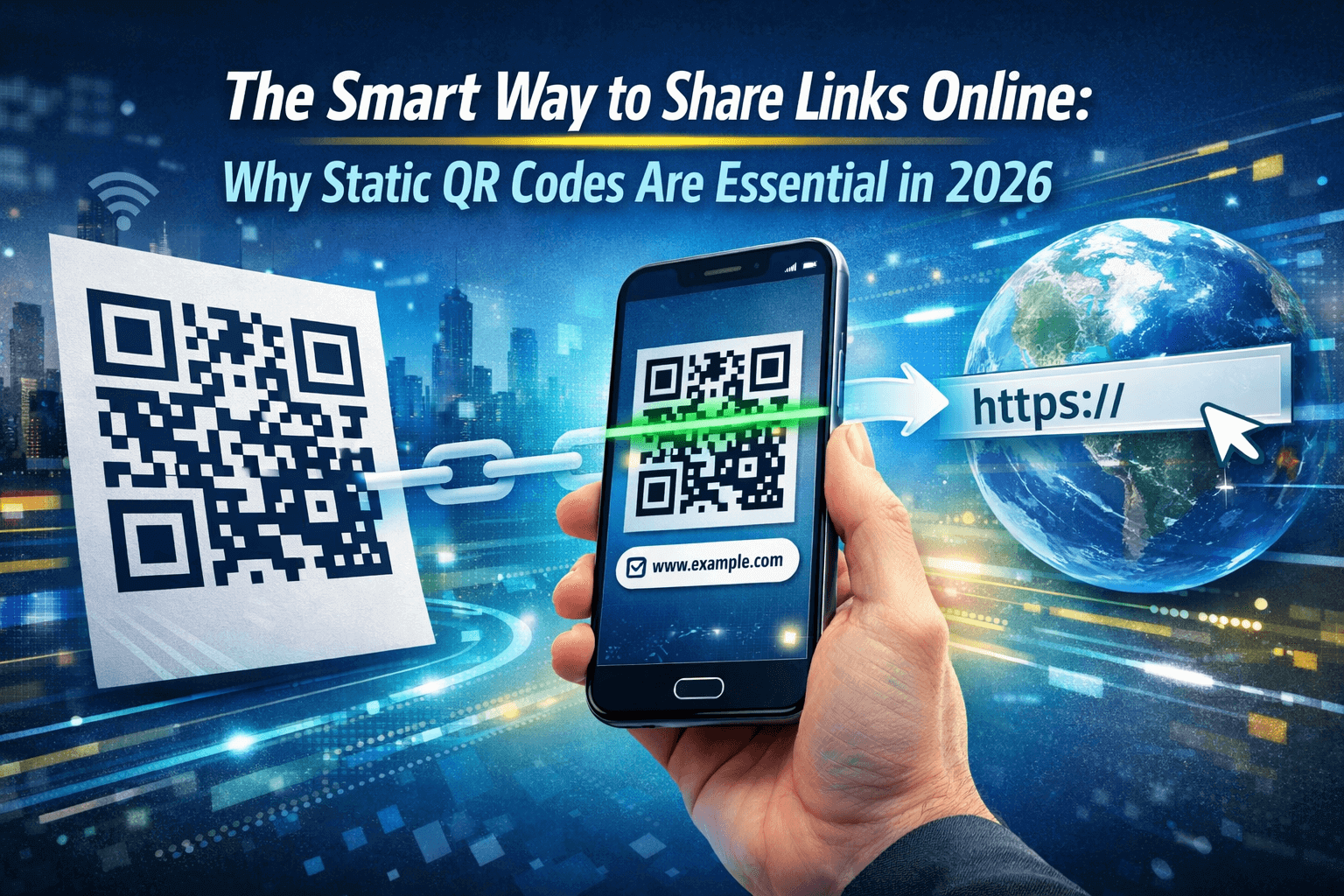
A static URL QR code contains a website link directly embedded in the QR image. Once generated, the destination link cannot be edited. While this may appear restrictive, it is often an advantage.
Because the QR code points straight to the URL, there is no redirection layer involved. This results in faster scanning, fewer technical dependencies, and no risk of the code stopping unexpectedly due to account limits or subscription issues.
Static QR codes are especially useful when the linked page is not expected to change.
Why Static QR Codes Still Make Sense Today
Printed materials are designed to last. Flyers, brochures, posters, product packaging, and business cards often remain in circulation for months or even years. A static QR code ensures that anyone scanning it in the future reaches the same destination without relying on a third-party system.
Another benefit is reliability. Static QR codes do not depend on dashboards, tracking servers, or renewal cycles. As long as the linked website is active, the QR code will continue to work.
This makes them a preferred choice for public signage, instruction manuals, and brand assets that need to remain stable over time.
Common Uses of Static URL QR Codes
Static QR codes are used across many industries because they solve a simple problem efficiently.
Typical examples include:
-
Product packaging linking to setup guides or documentation
-
Restaurant menus pointing to a fixed menu page
-
Event posters linking to registration or schedule pages
-
Business cards linking to a personal website or portfolio
-
Educational material linking to reference content
In these scenarios, the destination page rarely changes, which makes static QR codes the most practical option.
Why the QR Code Generator You Use Matters
Many QR code tools appear free but impose restrictions later. Some reduce image quality, add branding, limit usage, or deactivate codes after a period of time. These limitations can create serious problems when QR codes are printed and distributed at scale.
A reliable generator should offer permanent QR codes, high-resolution downloads, and clear separation between static and dynamic options.
Using a Free URL QR Code Generator that focuses on static QR codes helps avoid these issues. It allows users to create QR codes that remain active without hidden conditions or ongoing costs.
Performance and Practical Benefits
Because static QR codes link directly to the final URL, users reach the page faster. There is no intermediate redirect, which reduces loading time and improves the scanning experience. Faster access often leads to better engagement, especially on mobile devices.
Static QR codes also support offline-to-online traffic, which is useful for brand visibility and content discovery when placed on physical materials.
Simplicity Is Still an Advantage
Not every tool needs advanced features to be effective. Static QR codes continue to be popular because they are simple, dependable, and easy to manage.
Services like https://free-qr.com/ focus on generating QR codes that work consistently without unnecessary complexity. For users who want long-term reliability rather than short-term features, this approach remains the better choice.
Conclusion
Static URL QR codes continue to play an important role in connecting physical media with digital content. Their reliability, speed, and permanence make them suitable for a wide range of real-world use cases.
By choosing the right generator and using static QR codes where they make sense, businesses and individuals can create links that remain usable long after they are printed or shared.